

Teeth Sensitivity – 9 Causes, Home Care and When to See a Specialist
Teeth sensitivity usually means the protective outer layer of a tooth has been lost or breached, so cold, sweet or air reaches the dentine underneath. The common causes are worn enamel, receding gums, hard brushing, acidic food and drink, grinding, a crack, decay or a leaking old filling. A short sharp twinge often needs only simple care; sensitivity that lingers or keeps you awake needs a specialist check.
Book your consultation: https://ocean32care.in (online booking with your mobile number, no call needed)
By Dr. Kenil A. Lathia, MDS (Conservative Dentistry & Endodontics), Gujarat State Dental Council Reg. A-7754 · Ocean 32 – The Dentofacial Hub, Adajan, Surat · Last reviewed: November 2026
"My teeth hurt with cold water" is one of the most common things we hear at Ocean 32 – The Dentofacial Hub in Adajan, Surat. Sometimes the cause is as simple as a hard toothbrush. Sometimes the same twinge is the first sign of a cracked tooth or a nerve that is starting to struggle. This guide explains the real reasons behind teeth sensitivity, what you can do at home, and when a specialist examination under magnification is the safer choice. If you already have pain when you bite, read our page on diagnosis of hidden tooth cracks in Surat first.
Why are my teeth suddenly sensitive?
Teeth become sensitive when dentine is exposed. Dentine sits under the enamel and below the gumline, and it contains thousands of tiny fluid-filled tubes that lead towards the nerve. When cold, sweet or air reaches these tubes, the fluid moves and the nerve reads it as a sharp, short pain. Anything that removes enamel or uncovers the root can start it.
"Sudden" sensitivity is often not sudden at all. Enamel wears slowly for years and the tooth only complains once enough dentine is showing. A new crack, a chipped filling or fresh decay, on the other hand, can start it within days, which is why a change in your usual pattern is worth checking.
What are the main causes of teeth sensitivity?
The nine causes we see most often in our Surat practice are listed below. Many people have more than one at the same time, which is why a toothpaste alone sometimes helps only partly. Finding the exact cause for each tooth is what decides the right treatment.
- Tooth wear (attrition): teeth grinding or clenching flattens the biting surfaces until the yellow dentine shows through.
- Acid erosion: frequent sips of fizzy drinks, citrus, lemon water, pickles or acid reflux soften enamel.
- Brushing too hard: a hard brush and a sawing action wear notches at the gumline.
- Gum recession: when the gum moves back, the root surface, which has no enamel, is exposed.
- Gum disease: bone and gum loss around teeth uncovers roots. See our guide on gum disease symptoms and treatment.
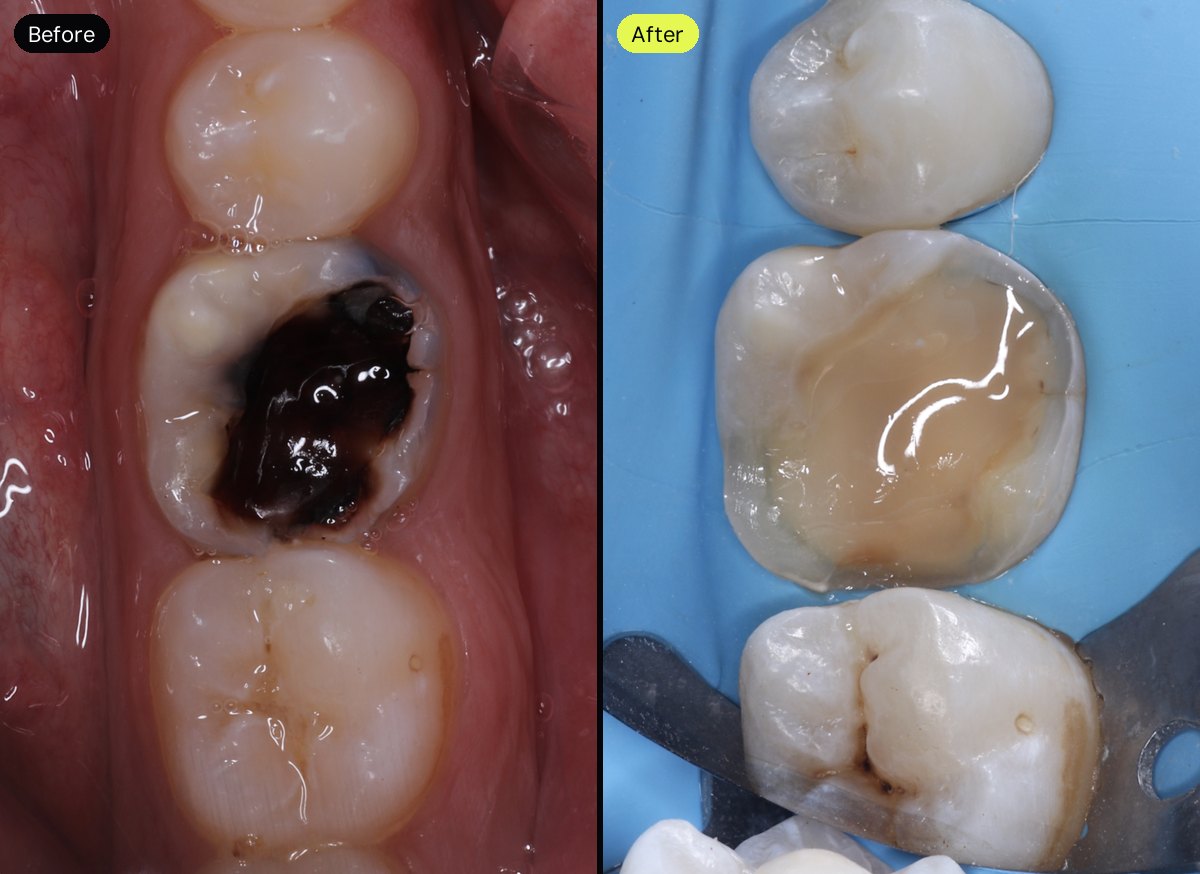
- Decay: a cavity, often between teeth, lets cold and sweet reach the dentine.
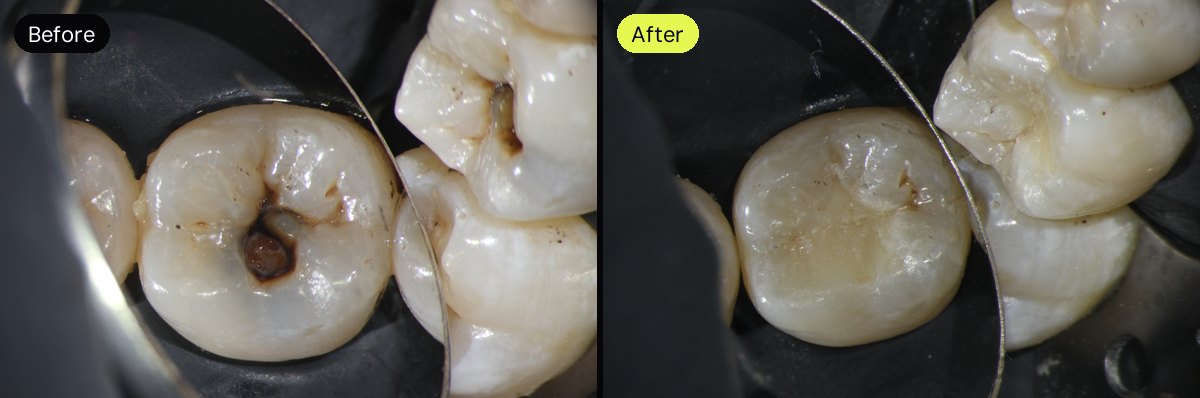
- Cracked teeth: a fine crack flexes when you bite and lets fluid move inside the tooth.
- Old or leaking fillings: gaps at the edge of an old restoration let bacteria and cold in.
- After whitening or a new filling: short-term sensitivity that usually settles within days to a few weeks.
 Is sensitivity to cold a sign of nerve damage?
Not usually. A short, sharp pain to cold that disappears within a few seconds of the cold going away is typical dentine sensitivity, and the nerve is healthy. Pain that lingers for 30 seconds or more, throbs, wakes you at night or starts on its own is different. That pattern suggests the nerve is inflamed and needs examination.
Sensitivity that is usually simple
- Sharp, short twinge with cold, sweet or air
- Goes away as soon as the trigger is removed
- Several teeth, often near the gumline
Sensitivity that needs a dentist soon
- Pain that lingers after the cold has gone
- Sensitivity to hot as well as cold
- Pain when you bite or release, on one tooth
- Night pain, swelling or a bad taste
When the nerve is already irreversibly inflamed, a careful microscopic root canal treatment in Surat relieves the pain and saves the tooth. In suitable cases we complete it as a single-sitting root canal.
Myth: "Sensitive teeth are just weak teeth, nothing can be done." Fact: sensitivity always has a cause, and most causes can be treated or controlled. Covering exposed dentine, correcting brushing, managing grinding and replacing a leaking filling often stop it completely.
What helps sensitive teeth at home?
For simple dentine sensitivity, a few habits make a clear difference within two to four weeks. The aim is to stop further wear and let the exposed dentine tubes close. If there is no improvement after a month of correct use, or if one tooth stands out, see a dentist rather than changing toothpaste again.
- Use a soft toothbrush with gentle, small circular movements, not hard sideways scrubbing.
- Use a desensitising toothpaste twice daily and, at night, spit without rinsing so it stays on the teeth.
- Keep acidic drinks to mealtimes, use a straw, and wait before brushing after acidic food.
- Rinse with plain water after tea with lemon, fizzy drinks or sour snacks.
- If you wake up with tired jaws or someone hears you grinding, mention it at your check-up.
How does a dentist treat teeth sensitivity?
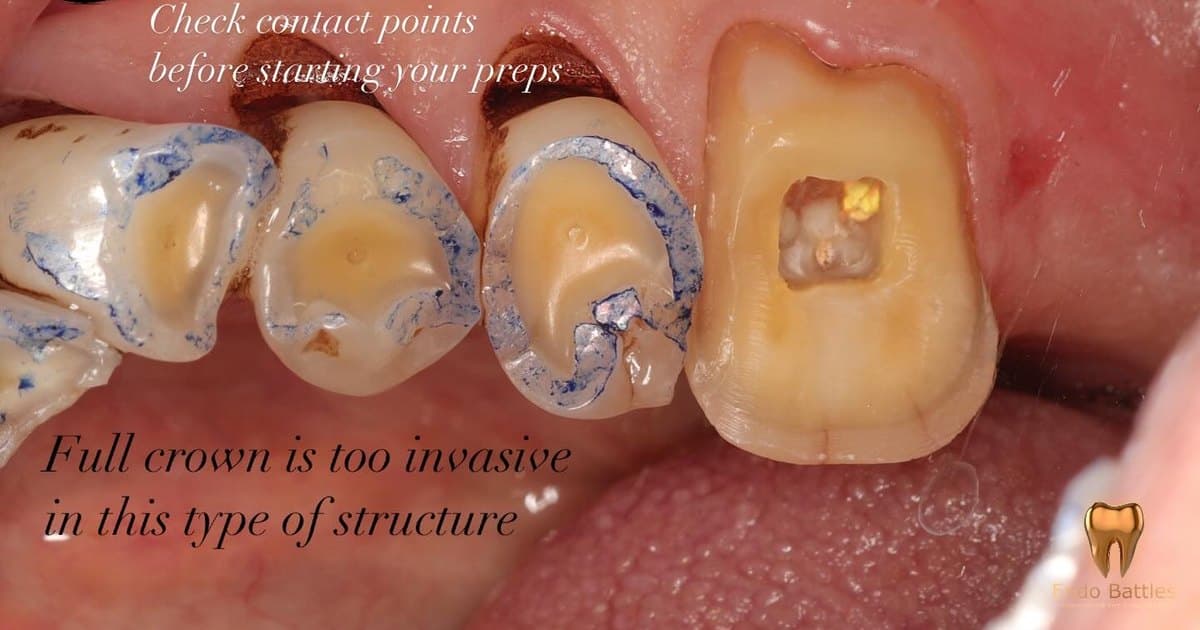
Treatment follows the cause. After examining each tooth, often under magnification, the options range from simple protective coatings to restoring worn or cracked teeth. The goal is always to keep as much natural tooth as possible. A full crown is not the default answer for sensitivity, and in many worn teeth it removes more tooth than needed.
- Desensitising varnish or bonding: seals exposed dentine at the gumline in one visit.
- Replacing leaking fillings: with a bonded restoration that seals the edges.
- Gum care: treating gum disease and, in selected cases, covering exposed roots. See gum treatment in Surat.
- Inlays and onlays for worn or cracked back teeth: a bonded ceramic piece that covers and supports the tooth while keeping healthy enamel. Read about CAD/CAM inlays and onlays in Surat, made in-house with CEREC.
- Night guard: to protect teeth from grinding.
- Full-mouth planning when many teeth are worn and the bite has collapsed. See full mouth rehabilitation in Surat.
- Root canal treatment only when the nerve is irreversibly inflamed.
 What does good-quality treatment for sensitive teeth look like?
Good treatment starts with a diagnosis for each tooth, not a toothpaste for every patient. It tests which teeth respond, checks for cracks and leaking edges under magnification, looks at the bite and gums, and then chooses the smallest treatment that solves the problem. You should understand the cause before anything is drilled.
Signs of careful treatment
- Cold and bite tests on individual teeth, plus X-rays where needed
- Cracks and old filling edges examined under a dental microscope
- Grinding and acid habits discussed, not ignored
- Conservative options such as bonding or onlays considered before crowns
Warning signs of rushed treatment
- A root canal advised for simple short twinges with no tests
- Healthy teeth cut down for crowns when bonding or an onlay would do
- A new filling placed over a crack that was never looked for
- Repeated toothpaste changes for months while one tooth keeps getting worse
At Ocean 32, sensitivity checks are done by an MDS endodontist with a Labomed Prima Pro surgical microscope, and worn or cracked teeth can be restored in a single visit with CEREC (Primescan scanning and in-house Primemill milling). The cover photo of this article shows a real case from our clinic: back teeth worn flat by grinding, with dentine exposed on every biting surface. The more conservative way to protect teeth like these is explained in our article on keeping more enamel.
Can teeth sensitivity be a problem for NRIs visiting Surat?
Yes, and planning helps. Many families from the UK, USA, Canada, Australia and Kenya tell us that a sensitive tooth was ignored for months before a trip. A short online consultation before you fly lets us review your symptoms and any recent X-rays, so the visit in Surat can focus on testing, diagnosis and, where suitable, same-day treatment.
- Note which teeth are sensitive, to what, and for how long the pain lasts.
- Send recent X-rays or photos on WhatsApp before travel.
- Allow time for a crack check and, if needed, an onlay or crown made in-house.
Read more about planning treatment around a visit on our dental tourism in Surat page.
Frequently asked questions
Can teeth sensitivity go away on its own?
Mild sensitivity after whitening or a new filling often settles within days to a few weeks. Sensitivity from wear, recession or a crack usually does not go away by itself, because the cause is still there. It can be controlled once the cause is treated.
Which toothpaste is good for sensitive teeth?
A desensitising toothpaste used twice daily for at least two to four weeks helps most simple cases. Use it with a soft brush and do not rinse straight after brushing at night. If one tooth stays sensitive, a toothpaste will not fix the underlying problem.
Why is only one tooth sensitive?
Sensitivity on a single tooth points to a local cause such as decay, a leaking filling, a crack or an inflamed nerve. It deserves an examination rather than waiting, especially if it also hurts when you bite.
Is sensitivity after a filling normal?
Some sensitivity to cold for a short time after a deep filling is common and should ease steadily. If it gets worse, lingers, or the tooth hurts when you bite, the bite may need adjusting or the nerve may need checking.
Does teeth whitening cause long-term sensitivity?
Whitening done under professional supervision usually causes only temporary sensitivity that settles after treatment. Existing worn enamel or exposed roots should be checked first. See teeth whitening in Surat.
When should I see a dentist for sensitive teeth?
See a dentist if the pain lingers, wakes you at night, comes with swelling, affects one tooth more than others, or has not improved after a month of correct home care.
Book a sensitivity check with a specialist in Surat
Book your consultation: https://ocean32care.in. You can also send your symptoms and X-rays on WhatsApp +91 74900 43232 or contact us. Patients abroad can book an online consultation on Google Meet, Monday to Saturday, 6–7 PM IST. If you have recently had root canal treatment, read our root canal aftercare guide.
Ocean 32 – The Dentofacial Hub
302, 3rd Floor, Western Arena, Green City Road, Madhuvan Circle, above HDFC Bank, Adajan, Surat, Gujarat 395009
Monday to Saturday, 10 AM–8 PM · Emergency +91 74900 23232
Share this with someone who winces every time they drink cold water.
Related at Ocean 32: Bad breath causes – 10 reasons, home fixes and when to see a dentist.
General information only. Treatment depends on an individual examination.