

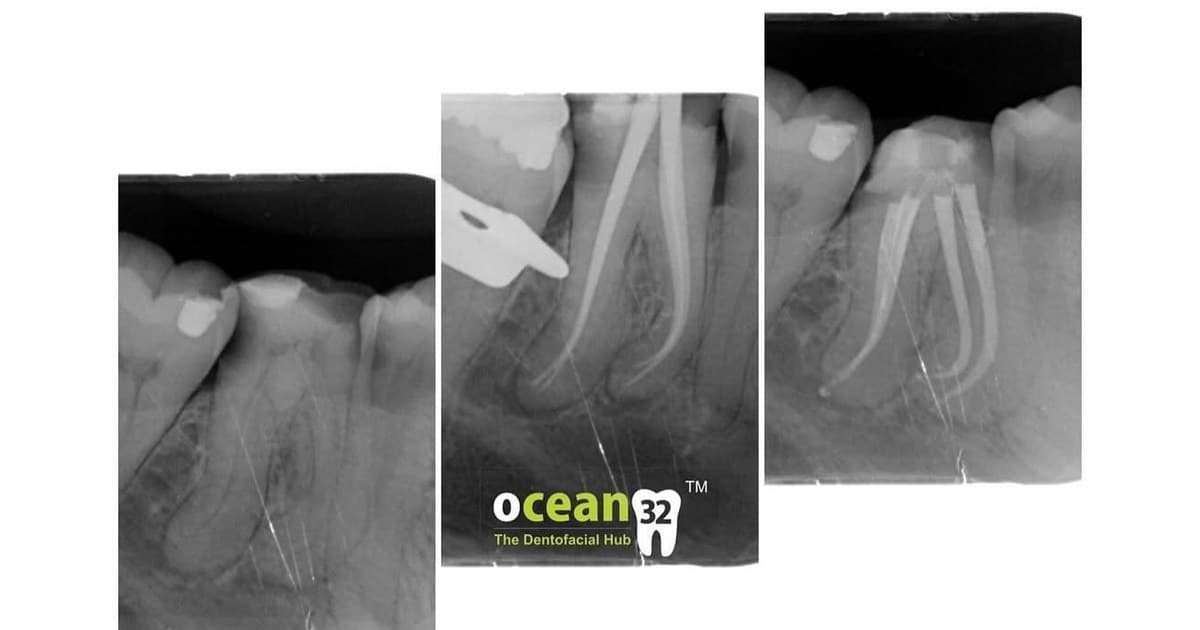
Root Canal Aftercare – What to Eat, How Long It Hurts, When to Crown
Root canal aftercare is simple but it decides how long the tooth lasts. Expect mild tenderness for a few days, eat soft food and chew on the other side, keep brushing and flossing, and get the final crown or onlay fitted on time, because a root-treated back tooth without a proper top restoration is the most common reason a good root canal still fails.
Book your consultation: https://ocean32care.in (online booking with your mobile number, no call needed)
By Dr. Kenil A. Lathia, MDS (Conservative Dentistry & Endodontics), Gujarat State Dental Council Reg. A-7754 · Ocean 32 – The Dentofacial Hub, Adajan, Surat · Last reviewed: November 2026
Most people worry about the root canal itself. In our experience as a specialist endodontic practice in Surat, the days and weeks after it matter just as much. A root canal done carefully under a microscope can still be let down by a crown that comes too late, a temporary filling that leaks, or a tooth that cracks while you chew on it. This guide covers what to expect, what to eat, when to call us, and why the crown step is not optional for most back teeth. If you are still deciding on treatment, start with our page on microscopic root canal treatment in Surat.
What is normal after root canal treatment?
Mild tenderness, especially when you bite, is normal for a few days after root canal treatment. The tissues around the root tip were inflamed before treatment and need time to settle. The pain should get a little better each day. The tooth may also feel slightly different or "high" for a short time.
- Numbness: the local anaesthetic usually wears off within a few hours. Do not chew until you can feel your lip and tongue properly, so you do not bite them.
- Tenderness on biting: common for a few days and gradually easing.
- Slight soreness of the gum where the clamp or rubber sheet sat during treatment.
- Jaw stiffness from keeping your mouth open, which settles in a day or two.
Comfort is planned from the start. How we keep the treatment itself comfortable is explained on our painless root canal treatment page.
How long does pain last after a root canal?
For most people, tenderness after a root canal settles within a few days, and the tooth feels normal within about a week. A tooth that was badly infected or very painful before treatment can take a little longer. What matters is the direction: steadily better is normal, getting worse after the first two or three days is not.
Call us if you notice
- Pain that increases instead of easing after two to three days
- New swelling of the gum, face or jaw
- The temporary filling cracks, wears down or falls out
- Your bite feels high and the tooth hits first when you close
- A rash, itching or other reaction to a prescribed medicine
Pain that returns months or years later is a different problem. We explain the usual reasons in why root canal pain comes back after treatment.
What can you eat after root canal treatment?
Eat soft food and chew on the opposite side until the final crown or onlay is fitted. A root-treated tooth with a temporary filling is weaker than it looks, and one hard bite can crack it. Warm, soft meals are ideal. Avoid hard, sticky and very chewy food on that side.
Good choices for the first days
- Khichdi, dal-rice, soft rotli dipped in dal or shaak
- Curd, buttermilk, upma, idli, soft poha
- Soups, porridge, well-cooked vegetables, eggs, paneer
Avoid on that side until the crown is on
- Roasted chana, peanuts, chikki and other hard snacks
- Supari, ice cubes and biting on hard objects
- Sticky sweets and chewing gum, which can pull out a temporary filling
- Very hot or very cold food in the first hours, while the area is still numb
Why does a tooth need a crown after a root canal?
A back tooth that needed a root canal has usually already lost a lot of structure to decay, old fillings or cracks, and the access opening removes a little more. A crown or onlay covers and protects the remaining walls so the tooth does not split under chewing force. For most molars and premolars this top restoration is part of the treatment, not an extra.
Front teeth with little damage sometimes need only a good bonded filling. Your dentist decides this from the walls that remain. When the tooth has lost a lot of its crown, a post and core build-up may be needed first, and in some molars a one-piece ceramic endocrown is an option, explained in our endocrowns guide.
Myth: "After a root canal the tooth is dead, so it cannot have any more problems." Fact: a root-treated tooth can still get new decay at the edges, can still crack, and still depends on healthy gums and bone. It needs the same brushing, flossing and check-ups as every other tooth, and usually a crown or onlay to protect it.
How soon should the crown be fitted after a root canal?
As soon as possible. A temporary filling is meant to last a short time. The longer it stays, the more chance that saliva and bacteria leak back into the cleaned canals, or that the tooth cracks while you wait. Ideally the final crown or onlay goes on within the first few weeks, and sooner when the tooth is badly broken.
At Ocean 32 this gap can often be removed completely. With German CEREC CAD/CAM, the tooth is scanned with a Dentsply Sirona Primescan, the crown is designed on screen and milled in our in-house CEREC Primemill, so a ceramic or zirconia crown can often be fitted the same day as the root canal finishes. See same-day crown after root canal and CEREC Tessera crowns. Where the walls are strong enough, a more conservative CAD/CAM onlay can protect the tooth while keeping more natural structure.
Watch it in under a minute: our short video on why the root canal and the crown belong together, youtube.com/shorts/bmh6u1heyP8.
What does good-quality root canal treatment look like?
Good root canal treatment cleans and seals every canal to its full length, keeps the tooth isolated from saliva during the work, and is followed quickly by a well-sealed crown or onlay. Poor-quality treatment usually fails in predictable ways that you can often see on an X-ray afterwards.
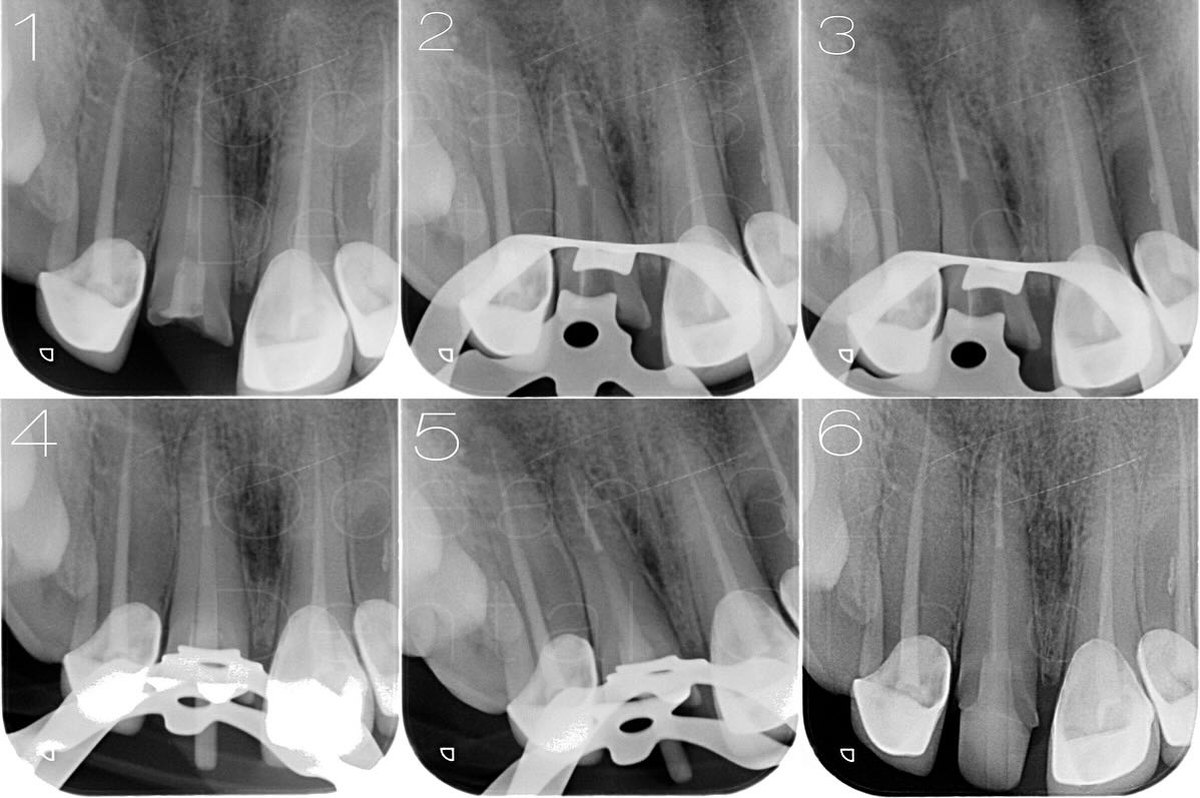 Signs of careful treatment
- A rubber sheet (dental dam) isolating the tooth during the procedure
- Canals located and treated under magnification, including small extra canals that are easy to miss
- Root fillings that reach close to the root tip and look dense on the X-ray
- A crown or onlay planned before or right after the root canal
Common reasons treatment fails
- Missed canals: an untreated canal can keep infection going. Molars often have more canals than people expect.
- Short or patchy root fillings that leave part of the canal unsealed
- No crown after root canal treatment, so the tooth cracks months later
- A leaking temporary filling left for months
This is why Dr. Kenil A. Lathia, an MDS endodontist treating patients in Surat since 2016, carries out root canals under a Labomed Prima Pro surgical microscope. When an older root canal has failed, it can often still be saved with root canal retreatment; our guide to failed root canal treatment explains how.
Aftercare tips if you fly home after a root canal in India
Many of our patients visit Surat from the UK, USA, Canada, Australia and Kenya. Flying after a completed root canal is usually fine. The key is to leave with the tooth fully restored, not with a temporary filling, and with copies of your records for your local dentist.
- Plan the final crown in the same trip. A single-sitting root canal with a same-day CEREC crown, where the tooth allows, fits a short visit.
- Ask for your before and after X-rays and a written summary of what was done.
- Keep soft food for the first day or two, even on the flight.
- Book a review with your local dentist, or an online consultation with us on Google Meet (Monday to Saturday, 6–7 PM IST), and send follow-up X-rays when advised.
Frequently asked questions
Can I brush and floss normally after a root canal?
Yes. Brush twice a day and clean between your teeth as usual, gently around the treated tooth for the first day or two. Keeping the gum healthy around the tooth protects the edge of the crown later.
Do I always need antibiotics after root canal treatment?
No. Most root canals do not need antibiotics, because the infection is removed by cleaning the canals. They are prescribed only in specific situations, such as spreading swelling. Take medicines only as advised for your case.
Can I go to work after a root canal?
Most people return to work the same day or the next day. You may want a quiet evening after a long appointment, but rest is not usually needed.
Is it normal for the tooth to feel different after a root canal?
Yes, for a short time. The tooth may feel slightly tender or "aware" when you bite. If it feels high or hits first when you close, call us. A small bite adjustment takes a few minutes and helps it settle.
How long does a root-treated tooth last?
With a well-sealed crown or onlay, good cleaning and regular check-ups, a root-treated tooth is long-lasting with care. How long depends on how much tooth remained, your bite and habits such as grinding.
Will I need a follow-up X-ray?
Often yes. A review X-ray after some months shows whether the area around the root tip is healing. We advise the timing for your tooth.
Book a root canal review or consultation in Surat
Book your consultation: https://ocean32care.in. You can also send your X-rays and questions on WhatsApp +91 74900 43232 or contact us. Patients abroad can book an online consultation on Google Meet, Monday to Saturday, 6–7 PM IST. For a fuller picture of how we treat root canals, read our root canal treatment guide.
Ocean 32 – The Dentofacial Hub
302, 3rd Floor, Western Arena, Green City Road, Madhuvan Circle, above HDFC Bank, Adajan, Surat, Gujarat 395009
Monday to Saturday, 10 AM–8 PM · Emergency +91 74900 23232
Share this with someone who has just had a root canal and is still waiting to get the crown done.
General information only. Treatment depends on an individual examination.
Related at Ocean 32: if a tooth is still sensitive to cold weeks after treatment, read teeth sensitivity – 9 causes, home care and when to see a specialist.