

Conservative Aesthetic Dentistry in Surat – Keeping More Enamel
Conservative aesthetic dentistry improves the appearance of your front teeth and smile while keeping as much healthy enamel as possible, usually by adding material to the teeth rather than cutting them down. It is for people who want whiter, better-shaped or more even front teeth but do not want aggressive drilling, and at Ocean 32 – The Dentofacial Hub in Adajan, Surat, it guides how we plan every smile.
Written and medically reviewed by Dr. Kenil A. Lathia, MDS (Conservative Dentistry & Endodontics), Fellowship in Aesthetic Dentistry, 15 years of clinical experience, GSDC Reg. A-7754 · Ocean 32 – The Dentofacial Hub. Last reviewed: November 2026.
This page is about how front teeth and smiles look. For decayed, cracked or broken teeth, see conservative dentistry; for every cosmetic option, see cosmetic dentistry in Surat.
Keeping your own tooth: a real Ocean 32 case
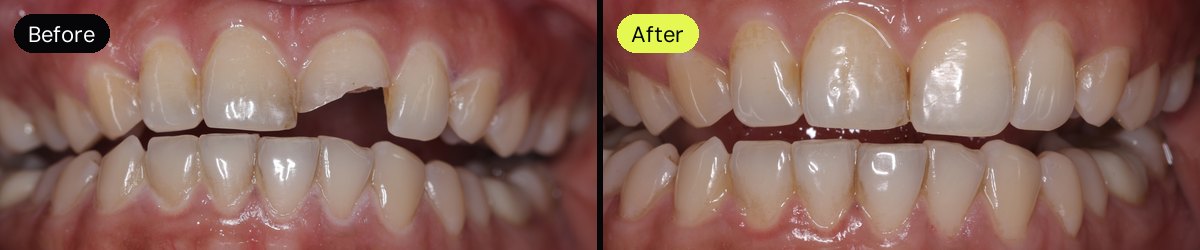
A broken front tooth before, and the patient’s own fragment bonded back after. When the piece is saved and the tooth allows it, re-attachment keeps natural enamel. Actual Ocean 32 patient, photographs with consent, unretouched. Results vary.Can a smile be improved without aggressive tooth preparation?
Often, yes, depending on the case. Yellowed or uneven colour, chipped or worn edges, small gaps, narrow teeth, teeth set slightly back and mild crowding can often be improved by adding to the teeth or moving them, with little or no enamel removed.
How far this can go depends on the colour and position of your teeth, your bite, any existing fillings or crowns, and the result you hope for; some smiles do need more preparation.
What does conservative aesthetic dentistry involve?
Some cosmetic work starts by reducing teeth to make room for new material. A conservative approach works the other way round: the final smile is planned beforehand and compared with your teeth as they are now. Where a planned tooth is fuller than the existing one, material is added with little or no reshaping; where a tooth sits outside the plan, we ask whether moving it would be kinder than cutting it back.
The aim is a natural-looking smile enhancement that respects tooth structure, biological principles, function and long-term restorability, with anterior aesthetic restorations no thicker or more extensive than they need to be.
Which additive approaches can improve front teeth?
Whitening before colour matching
Composite and ceramic do not whiten, so if you would like lighter teeth, whitening is usually done before bonding or veneers and the new shade is chosen once your colour has settled. Sometimes whitening alone is enough. See teeth whitening and brightening.
Composite bonding
Tooth-coloured composite is bonded directly to the enamel to rebuild chipped edges, lengthen worn teeth, close small gaps and even out shapes. It usually needs little or no drilling and can be adjusted or repaired later, although it can stain or chip over time. See gap closure and front teeth shape and colour correction.
Aligners before veneers
A tooth that is rotated or sits forward would need cutting back to fit a line of veneers. Straightening it beforehand with SureSmile or Invisalign clear aligners can reduce the preparation needed, and sometimes removes the need for a veneer on that tooth. See clear aligners.
Minimal-preparation and no-prep veneers
Minimal-preparation veneers are thin ceramic shells bonded to the front of the teeth, with any reshaping kept within the enamel where possible. In suitable cases, such as small or narrow teeth or teeth set slightly back, no-prep veneers may be bonded with no planned enamel reduction. E.max, a lithium disilicate glass-ceramic, is one of the materials used for thin veneers. This conservative veneer dentistry depends on careful case selection; see E.max veneers and ceramic veneers.
Why does preserving enamel matter?
Enamel, the hard outer layer of the tooth, does not grow back. Keeping it matters for three reasons:
- Bonding. Adhesives generally bond more reliably to enamel than to the dentine beneath, so restorations bonded mainly to enamel tend to hold more predictably.
- Comfort and the nerve. Deeper preparation exposes dentine, which can be sensitive, and brings the work closer to the nerve.
- Long-term restorability. Restorations may need replacing over a lifetime, and each replacement can cost a little more tooth. Starting conservatively keeps options open, such as replacing a veneer with another veneer rather than a crown.
Veneers are usually not reversible once enamel has been reshaped, another reason to reshape no more than the result needs.
When is more preparation unavoidable?
We will tell you honestly when a no-prep or minimal-prep approach will not work well. More reduction may be needed when:
- a tooth is very dark, for example after root canal treatment or from deep internal staining, and needs more ceramic thickness to mask it;
- teeth sit well forward and moving them with aligners is not an option for you;
- old veneers or crowns are being replaced, or a tooth is heavily filled or broken, when a crown may suit better (see dental veneers vs crowns and CEREC crowns);
- teeth are badly worn or the bite has changed, which may call for full-mouth rehabilitation.
Even then, preparation is measured against the planned result, and the Labomed Prima Pro operating microscope helps keep margins precise and preparation conservative.
Who is suitable, and who should wait?
It often suits adults with healthy gums, sound teeth and a stable bite who want a subtle, natural change. Other problems need treating beforehand, and some cases are not suitable:
- Active gum disease must be controlled before anything is bonded to the teeth.
- Decay is treated before cosmetic work.
- Heavy grinding or clenching (bruxism) puts thin bonded restorations at risk of chipping, so we assess it beforehand and often recommend a night guard.
- Severe crowding is usually better corrected with orthodontic treatment than disguised with veneers.
How does a mock-up guide preparation?
A mock-up is a trial version of your planned smile: tooth-coloured resin, shaped from the digital smile design and placed over your teeth without drilling, so you can see it in your face, speak and smile with it, and ask for changes.
Once you approve it, the mock-up becomes a guide. Where veneers are needed, preparation can be made through the mock-up, so depth is measured from the planned final shape rather than from the tooth as it is now. Where the plan adds to a tooth, little or no enamel may need removing. This is the heart of conservative smile design: the result is decided beforehand, and the preparation follows it.
What are the steps from consultation to final smile?
- Consultation: your goals, an examination of teeth, gums and bite, and X-rays where needed.
- Photos, video and Primescan scan: photographs and a short video of your smile as you talk and laugh, with a Dentsply Sirona CEREC Primescan digital scan of your teeth and bite.
- Digital smile design: proportions and shapes planned on screen; see digital smile design.
- Mock-up or trial smile: where suitable, the design is tried in your mouth.
- Final restorations: bonding or veneers, after any whitening; ceramic veneers can be milled in the clinic on the CEREC Primemill.
- Review: bite, gums and restorations checked, with regular reviews afterwards.
Read more on smile design and smile makeover and smile makeover planning.
How do I look after bonding and veneers?
- Brush twice daily and clean between your teeth.
- Do not bite nails, pens, ice or packaging.
- Wear a night guard if one is advised.
- Composite stains more easily than ceramic, so rinse with water after tea and coffee.
- Keep regular reviews so bonding can be polished and chips repaired early.
How long bonding or veneers last depends on the material, how much enamel they are bonded to, your bite, grinding, hygiene and regular reviews; we do not promise a lifespan.
Who plans your smile?
Dr. Kenil A. Lathia plans your smile. His MDS is in Conservative Dentistry & Endodontics (Bharati Vidyapeeth, Pune, 2016), the specialty concerned with restoring teeth while keeping as much natural structure as possible, and he has completed fellowships in Aesthetic Dentistry, Microscopic Dentistry, Digital CAD/CAM Dentistry and Aesthetic Medicine (ILAMED, affiliated with the University of Greifswald, Germany). With 15 years of clinical experience (GSDC Reg. A-7754), he is a Gold Member of the International Microscopic Dental Club (Italy) and an Indian Dental Association member. Read more about Dr. Kenil A. Lathia.
I live abroad. Can I plan treatment around my trip?
Yes. If you are an NRI or travelling to Surat, book an online video consultation on Google Meet before you travel and send clear photographs of your smile. We can tell you whether a conservative approach looks likely, confirm it once we examine you, and arrange appointments around your trip. Bonding and whitening often fit a shorter stay; veneers usually need more than one visit unless CEREC single-visit veneers suit your case. See dental tourism in Surat.
Patients visit from Adajan, Pal, Vesu, City Light, Athwa, Rander and across Surat and South Gujarat.
How much will it cost?
Typical fee range at Ocean 32: Minimal-preparation veneers / bonding: ₹14,000 – ₹20,000 per tooth. The exact fee depends on your tooth, the material and your plan, and is confirmed in your written estimate after examination.
The fee depends on the approach chosen, the number of teeth involved and the materials used. Your written estimate follows the examination.
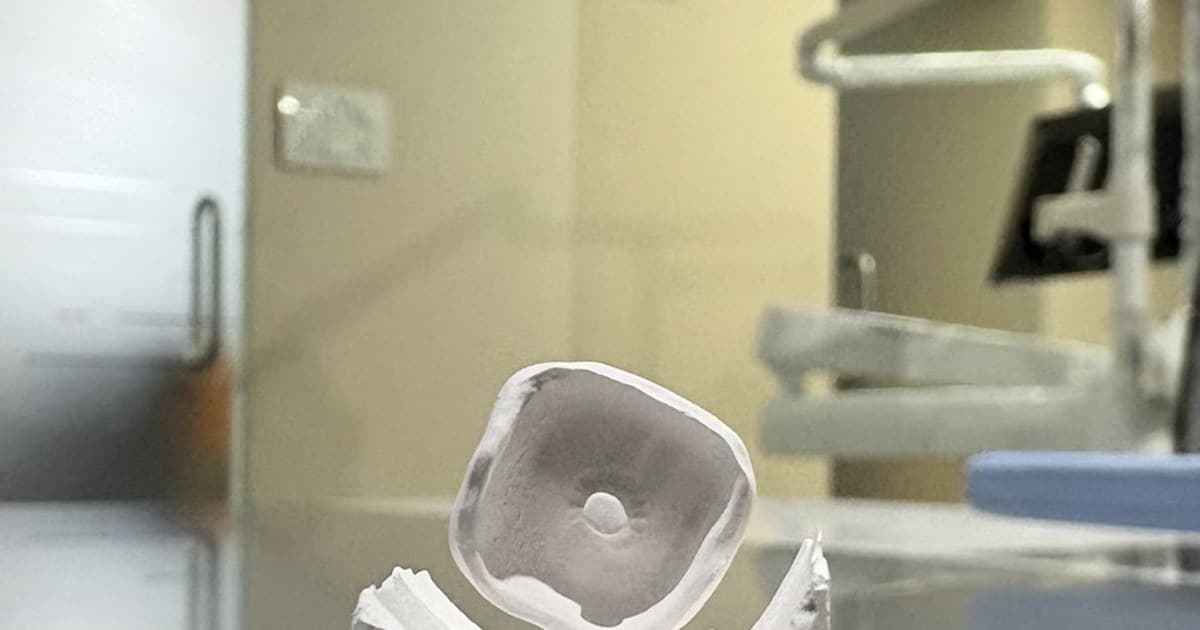
Watch: re-attachment of a fractured tooth fragment
Watch more of our real procedures on the Ocean 32 YouTube channel, and book your consultation at ocean32care.in.Frequently asked questions
Are no-prep veneers possible for everyone?
No. They suit teeth that are small, narrow, worn or set slightly back, where material can be added without looking bulky. Teeth that are dark or sit forward usually need some preparation, or aligners beforehand.
Are minimal-preparation veneers reversible?
Usually not, once enamel has been reshaped. No-prep veneers involve little or no reshaping in suitable cases, but any veneer should be treated as a long-term commitment.
Should I choose composite bonding or veneers for my front teeth?
It depends on how much change is needed. Bonding usually needs no drilling and is easy to adjust or repair; ceramic veneers resist staining better and suit bigger changes in colour or shape.
Will minimal-prep veneers make my teeth look bulky?
They can, if material is added where there is no room. That is why the plan is tried as a mock-up, so thickness and shape can be judged in your face before anything is committed.
Do I need aligners before veneers?
Not always. Aligners help when teeth are crowded, rotated or sit forward, because moving them can reduce or avoid the preparation that veneers would otherwise need.
How do I book an appointment?
To plan conservative aesthetic dentistry in Surat, contact Ocean 32 – The Dentofacial Hub:
- WhatsApp: +91 74900 43232
- Book online: ocean32care.in
- Online video consultation: ₹1,000 on Google Meet, 6–7 PM Mon–Sat
- Clinic hours: Mon–Sat, 10 AM–8 PM
- Address: 302, 3rd Floor, Western Arena, Madhuvan Circle to Green City Road, above HDFC Bank, Adajan, Surat
- Dental emergency line: +91 74900 23232
Ocean 32 – The Dentofacial Hub opened in Adajan in 2016. Dr. Kenil A. Lathia holds an MDS in Conservative Dentistry & Endodontics and an ILAMED fellowship affiliated with the University of Greifswald.
General information, not a substitute for professional advice. How much preparation your teeth need is decided after an examination, and individual results vary.
Related at Ocean 32: questions to ask about enamel, mock-ups and materials before you choose a clinic are in how to choose a cosmetic dentist in Surat.