

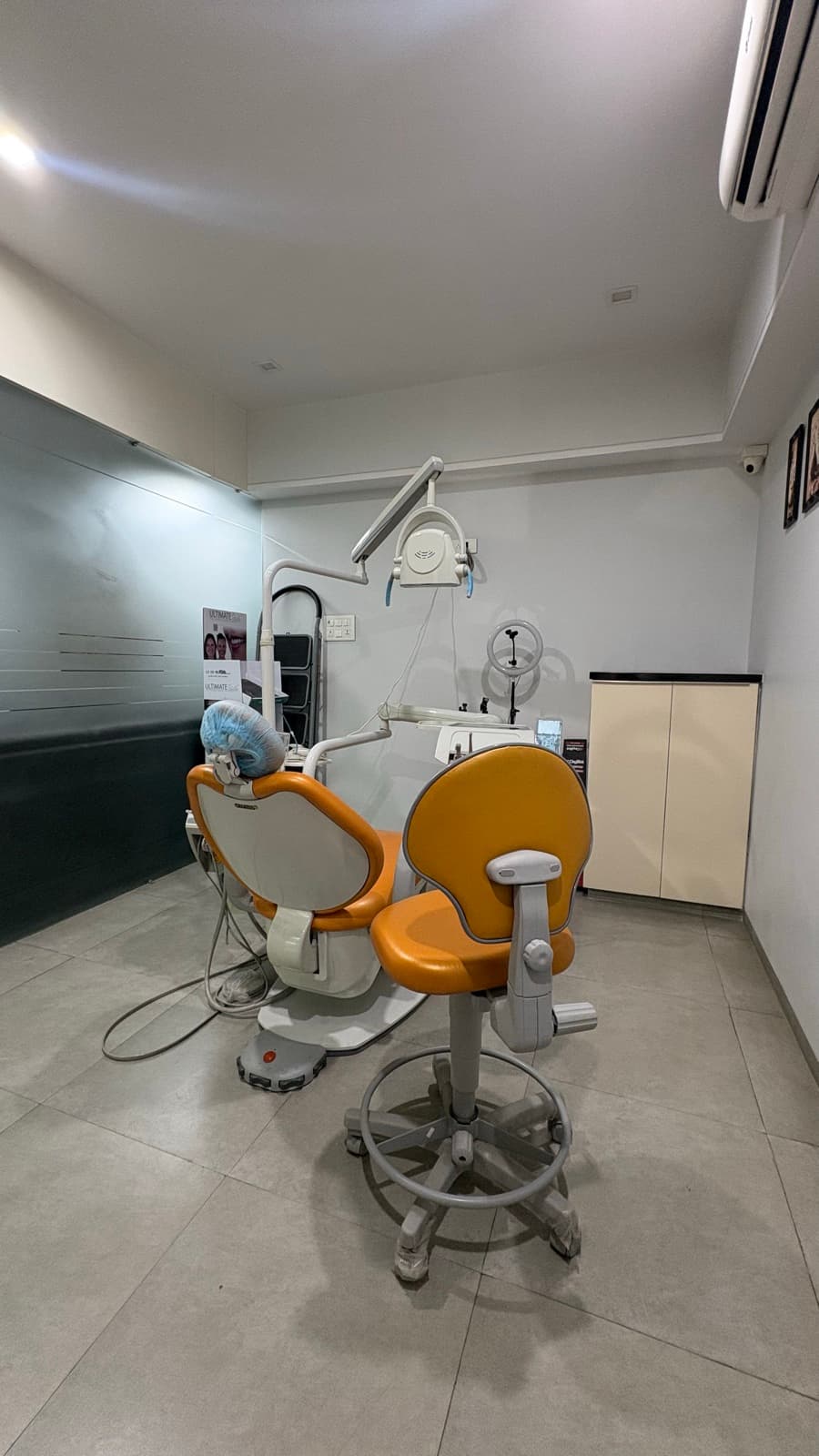
Wisdom Tooth Removal in Surat: What to Expect
Wisdom teeth are the last molars to come through, usually in the late teens or twenties, and they often do not have enough room. If you have pain, swelling or food trapping at the back of your mouth, wisdom tooth removal in Surat at Ocean 32 starts with a careful assessment so you know whether the tooth really needs to come out, how difficult it is likely to be, and what recovery will look like.
Written and medically reviewed by Dr. Kenil A. Lathia, MDS (Conservative Dentistry & Endodontics), Ocean 32 – The Dentofacial Hub. Last reviewed: November 2026.
Who is this for?
You may need a wisdom tooth assessment if you notice:
- Pain at the back of the jaw, sometimes spreading to the ear or the side of the head.
- Swollen, tender gum over a partly erupted tooth, often with a bad taste or smell.
- Difficulty opening your mouth fully, or pain while swallowing.
- Food repeatedly getting stuck behind your last molar.
- Decay in the wisdom tooth or in the tooth in front of it.
- Repeated episodes of the same gum infection that settles and comes back.
Not every wisdom tooth needs removal. A tooth that has come through fully, is easy to clean and causes no problems can often be left alone and monitored.
How wisdom tooth removal works at Ocean 32
- Consultation and digital X-ray. We examine the area and take a digital X-ray to see the angle of the tooth, the shape of the roots and their relationship to nearby structures, including the nerve canal in the lower jaw.
- Honest planning. We explain whether the tooth should be removed, left and watched, or managed first with cleaning and medication if there is an active infection. If the X-ray suggests the roots are very close to the nerve or the case is unusually complex, we will tell you and discuss further imaging or referral to a hospital-based oral surgeon.
- Medical check. Tell us about any medicines, especially blood thinners, diabetes, blood pressure or heart conditions, and any pregnancy.
- The procedure. The area is numbed with local anaesthetic. A tooth that has fully erupted may be removed simply. An impacted tooth may need a small opening in the gum and the tooth divided into pieces so it can be removed with less force on the bone.
- Closing and instructions. Stitches may be placed, a gauze pack is given to bite on, and you receive written aftercare instructions.
What to expect on the day
You will be awake but numb. You may feel pressure and movement, but you should not feel sharp pain; if you do, tell us and we will add more anaesthetic. Many patients find the visit more comfortable than they expected. Read more about our approach on the comfortable dentistry page.
Recovery and aftercare
- Bite firmly on the gauze for the time advised to help a blood clot form.
- Do not rinse, spit forcefully, use a straw or smoke for the first day, as this can disturb the clot.
- Use a cold pack on the cheek in short intervals on the first day to limit swelling.
- Eat soft, cool or lukewarm food and chew on the other side.
- From the next day, gentle warm salt-water rinses after meals help keep the area clean.
- Swelling and stiffness usually peak in the first two to three days and then settle. Stitches, if not dissolvable, are removed at a review visit.
Contact us if pain gets worse after a few days instead of better, if bleeding does not stop with pressure, or if you develop fever or increasing swelling.
Risks and limitations
Every surgical procedure carries some risk, and it is important that you hear about them before deciding:
- Dry socket: the clot is lost and the socket becomes painful a few days after removal. It is treatable but uncomfortable. Smoking increases the risk.
- Swelling, bruising and jaw stiffness for several days.
- Infection of the socket.
- Numbness or tingling of the lip, chin or tongue if the nerve is irritated. This is usually temporary but can rarely be long-lasting, which is why the pre-operative assessment matters.
Alternatives
Depending on the situation, alternatives include monitoring a symptom-free tooth with periodic X-rays, treating a gum infection around the tooth with cleaning and medication, or removing only the crown portion of a lower tooth whose roots lie very close to the nerve (a procedure called coronectomy, suitable only in selected cases). If the tooth in front has been damaged by decay, it may need a filling or root canal treatment. If you lose a molar instead, a single tooth implant may be an option later.
For patients travelling from abroad
A wisdom tooth removal usually needs a consultation with X-ray, the procedure itself, and one review visit about a week later. This normally fits within a 2–3 week trip, but we suggest booking the surgery early in your stay rather than just before your flight, so any healing issues can be checked before you leave. Send us an existing X-ray before you travel if you have one.
Areas we serve
Our clinic in Adajan is easy to reach from Pal, Rander and Piplod, and patients regularly come from Vesu, Ghod Dod Road and Katargam for wisdom tooth assessments.
Frequently asked questions
Does wisdom tooth removal hurt?
The area is fully numbed, so the procedure itself should feel like pressure rather than pain. Some soreness afterwards is normal and is managed with prescribed medicines.
Should I remove a wisdom tooth that does not hurt?
Not always. If it is healthy, fully erupted and easy to clean, it may be left. Removal is considered when there is decay, repeated infection or damage to the neighbouring tooth.
How long does recovery take?
Most people return to routine work within a few days. Swelling settles over about a week, while the bone continues to heal for several weeks.
Can I remove a wisdom tooth while it is swollen?
If there is active infection, we may first clean the area and prescribe medication, then remove the tooth once the swelling has settled.
Book a wisdom tooth assessment
To book, WhatsApp us on +91 74900 43232 or use our contact page. Ocean 32 – The Dentofacial Hub, 302, 3rd Floor, Western Arena, Madhuvan Circle to Green City Road, above HDFC Bank, Adajan, Surat, Gujarat 395009. Open Monday to Saturday, 10 AM to 8 PM.
This page is for general information only and is not a substitute for professional advice. A diagnosis needs an examination by a dentist.