

Why Multichair or High-OPD Clinics Often Compromise on Quality Dentistry
In today’s fast-paced healthcare environment, several dental setups focus more on volume than value — operating multiple chairs, attending to hundreds of patients each week, and hiring numerous associate dentists. While such clinics may look appealing from the outside, the truth is often hidden behind numbers.
When patient count becomes the priority, quality, precision, and long-term results are affected.
Here is why multichair, high-OPD dental clinics often fail to deliver true quality dentistry — and why personalised, specialist-driven care matters.
1. Quantity Over Quality
Large dental clinics aim for maximum OPD inflow, which limits time spent per patient.
However, procedures such as root canals, crowns, veneers, smile design, and implants require:
- Use of a dental operating microscope
- 3D scanning and digital planning
- Time, focus, and precision
When a dentist handles 20–30 patients a day, such attention to detail becomes impossible.
This often results in compromised accuracy, short-term outcomes, and higher chances of treatment failure.
2. Treatments Are Often Delegated to Junior Associates
Multichair clinics commonly hire fresh BDS graduates or interns as associate dentists to manage high patient flow. These doctors often lack:
- Specialist MDS training
- Extensive clinical experience
- Microscope-based precision skills
While the clinic’s brand name may appear reputed, the actual treatment is frequently performed by inexperienced hands rather than trained specialists.
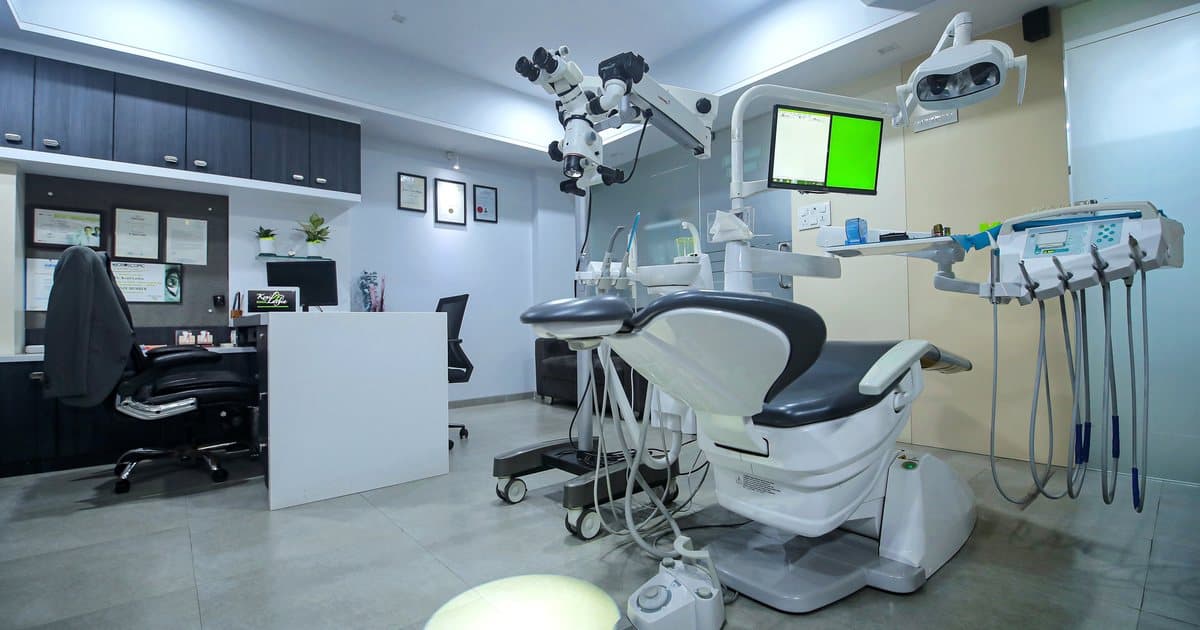
In contrast, at Ocean 32, all key procedures are performed only by MDS specialists using magnification and CAD-CAM technology to ensure expert-level outcomes.
3. Limited Use of Microscopic and Digital Dentistry
Volume-based clinics rarely invest in advanced technology because it slows down patient turnover.
Modern high-quality dentistry requires:
- Dental operating microscopes
- Digital scanning and CAD-CAM systems
- CBCT-guided treatment planning
Skipping such technology increases the risk of missed cracks, incomplete root canals, inaccurate diagnosis, and poorly fitting crowns or veneers.
4. Lack of Personalised Care and Connection
Dentistry is not just about treating teeth — it is about understanding the patient.
In commercial setups, patients often meet different doctors at each visit, resulting in:
- Lack of continuity in treatment
- Poor follow-up and aftercare
- No personal rapport or trust
Personalised dentistry requires consistent care from the same specialist who knows your dental history and goals.
5. Quality Dentistry Requires Time
Precision-based treatments such as microscope-assisted root canals, digital smile design, and CAD-CAM crowns cannot be rushed.
An MDS specialist may treat fewer patients a day, but each case is:
- Technically accurate
- Long-lasting
- Biologically sound
True dentistry values excellence over speed.
The Ocean 32 Approach — Quality Over Quantity
At Ocean 32 The Dentofacial Hub, Adajan, Surat, the focus is on precision, personal attention, and ethical dentistry. The clinic follows:
- MDS-only specialist care
- Microscope and CAD-CAM digital workflow
- One-to-one attention to every patient
- Long-lasting, science-based dental treatment
Choosing quality-driven dentistry is an investment in the health, beauty, and longevity of your smile — not just a one-time fix.
Visit Ocean 32 The Dentofacial Hub
Address: 302, Western Arena, Above HDFC Bank, Green City Road, Adajan, Surat
Phone: +91 74900 43232
Website: www.bestdentistsurat.com
Frequently asked questions
Why do some dental clinics have a different doctor at each visit?
High-volume clinics often have several associate dentists working across many chairs, so you may see whoever is free. This can affect continuity, follow-up and accountability. Before treatment, you can ask which dentist will do your procedure and whether the same dentist will follow you up.
Does a big multi-chair clinic mean better dental treatment?
Not necessarily. Size and the number of chairs do not tell you who will treat you or how much time they will spend. Ask about the treating dentist's qualification, the time planned for your procedure, the use of magnification and digital planning, and how follow-up works.
What questions should I ask before starting dental treatment?
Ask who will do the treatment and their qualification, what the diagnosis and options are, what happens if you wait, what the written estimate includes, how many visits are needed, and how follow-up works. A good clinic answers clearly and does not pressure you to decide on the spot.
Will the same specialist treat me throughout at Ocean 32?
Yes, for each type of treatment. Dr. Kenil A. Lathia personally does root canals, smile design, veneers, crowns and restorations, and the visiting MDS specialist for your treatment, such as the orthodontist or periodontist, follows your case through. Treatment is not handed over to junior associates.
Why does careful dentistry need longer appointments?
Precise work such as microscope root canals, digital smile design and bonding ceramic crowns or veneers needs uninterrupted time for isolation, careful cleaning and checking the fit and bite. Rushed appointments increase the chance of missed canals, leakage or poorly fitting restorations, which can mean repeat treatment later.