
Retainers after braces and aligners: types, how long to wear them and care
A retainer holds your teeth in their new position after braces or clear aligners, because teeth tend to drift back for months and, to a smaller degree, for life. Most people need a fixed (bonded) retainer, a removable one, or both, and the safest plan is long-term night-time wear as your orthodontist advises.
By Dr. Kenil A. Lathia, MDS · Ocean 32 – The Dentofacial Hub, Adajan, Surat · Last reviewed: November 2026
Book a retainer check: https://ocean32care.in · WhatsApp +91 74900 43232
The day the braces come off feels like the finish line. In fact, it is the start of the most important phase: keeping the result. At Ocean 32 – The Dentofacial Hub in Adajan, retainers are planned by our visiting MDS orthodontist as part of every braces and aligner treatment, not as an afterthought.
Why do teeth move back after braces?
Teeth sit in bone and are held by fibres in the gum and around the root. When braces move a tooth, these fibres are stretched and the bone around the root is remodelled. For a period after treatment, the fibres tend to pull the teeth back towards where they started. On top of that, teeth keep shifting slowly throughout life, whether or not you have had braces. Lower front teeth are especially prone to crowding again.
A retainer simply holds the teeth still while the bone and fibres settle, and afterwards it keeps them from drifting with age.
What are the types of retainers?
- What it is: Fixed (bonded) retainer: A thin wire bonded behind the front teeth; Clear removable retainer: A thin transparent tray made from a scan of your teeth; Wire (Hawley-type) removable retainer: An acrylic plate with a wire across the front teeth
- Visible: Fixed (bonded) retainer: No, it sits behind the teeth; Clear removable retainer: Almost invisible; Wire (Hawley-type) removable retainer: Wire visible on the front teeth
- Depends on you remembering: Fixed (bonded) retainer: No; Clear removable retainer: Yes; Wire (Hawley-type) removable retainer: Yes
- Cleaning: Fixed (bonded) retainer: Floss threader or interdental brush needed; Clear removable retainer: Clean the tray daily; brush teeth normally; Wire (Hawley-type) removable retainer: Clean the plate daily
- Common problems: Fixed (bonded) retainer: Wire can come loose or bend; Clear removable retainer: Can crack, warp in heat, or get lost; Wire (Hawley-type) removable retainer: Can break; can feel bulky at first
- Often used for: Fixed (bonded) retainer: Lower and upper front teeth; Clear removable retainer: Whole arch, usually worn at night; Wire (Hawley-type) removable retainer: Whole arch; allows small adjustments
Many orthodontists combine a fixed retainer with a removable night-time retainer. Your orthodontist chooses based on your case.
How long do you need to wear a retainer?
Most orthodontists now advise long-term retention. A common pattern is:
- First months after braces or aligners: wear the removable retainer most of the day and night, as instructed.
- After that: night-time wear only.
- Long term: keep wearing it at night, several nights a week or every night, for as long as you want your teeth to stay straight.
A fixed retainer stays in place for years, as long as it is intact and kept clean. Your orthodontist will give you a written wear schedule; follow that over any general rule.
Retainers after clear aligners
Aligner patients need retainers too. After the last SureSmile or Invisalign tray, the teeth are scanned again and a retainer is made to fit the final position. Do not keep wearing an old aligner as a retainer unless the orthodontist tells you to; it may not match the final tooth position. You can read more about the aligner journey in our clear aligners in Surat guide.
How to clean and look after your retainer
- Removable retainers: rinse after removing, brush gently with a soft brush and cold or lukewarm water, and keep in the case when not in your mouth.
- Never use hot water, leave the retainer in a hot car, or soak it in strong mouthwash; clear trays can warp.
- Keep away from pets: dogs often chew retainers.
- Do not wrap it in a tissue at a restaurant or function; this is the most common way retainers get thrown away.
- Fixed retainers: clean under and between the bonded wire every day with a floss threader or interdental brush, and come for regular cleaning, because tartar can build up behind the lower front teeth.
- Plaque grows on retainers just as on teeth, and an unclean retainer can cause bad breath.
What to do if your retainer breaks, is lost or no longer fits
- Fixed wire loose or bent: call us soon. Do not try to bend it back. A loose wire lets teeth move within days or weeks.
- Removable retainer cracked or lost: book a visit for a new scan and a replacement. Until then, do not force an old tray that feels tight.
- Retainer feels tight after a few nights off: the teeth have started to move. Wear it as advised and book a check; if it no longer seats, the teeth may need a short course of treatment to correct the relapse.
How we handle retainers at Ocean 32
- Planned from day one: the retainer type is discussed at the start of braces or aligner treatment.
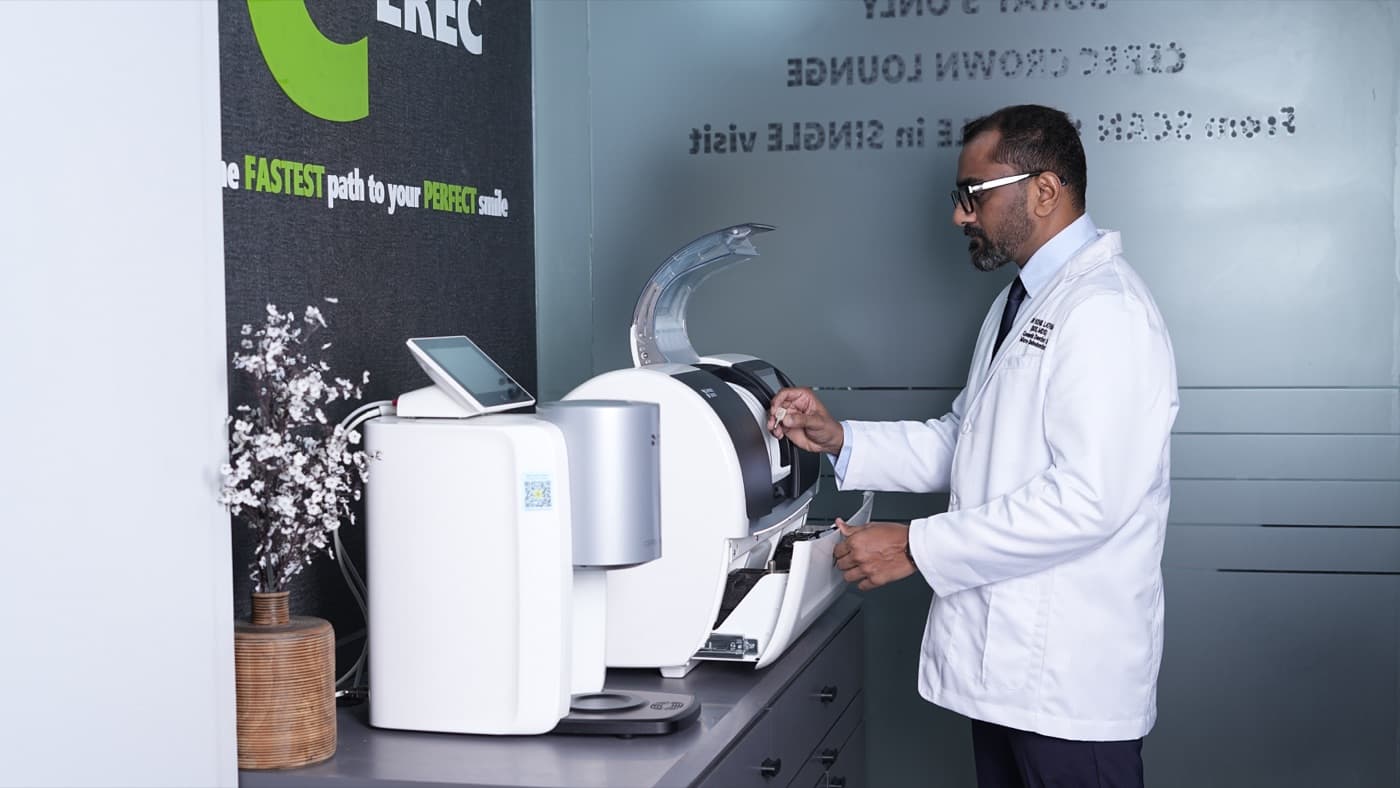
- Digital scan on the day braces come off: with the Primescan intraoral scanner, without impression putty.
- Fitting: a fixed retainer is bonded and/or a removable retainer is fitted; you get a written wear schedule.
- Care demonstration: how to clean the retainer and the teeth around a fixed wire.
- Review visits: retainer and gum checks at the intervals the orthodontist advises, along with your routine six-monthly dental check-up.
- Repairs and replacements: a broken fixed wire is re-bonded and lost trays are remade from your scan where possible.
The fee for retainers and replacements is confirmed in a written estimate after examination. Payment by cash, UPI, cheque or bank transfer.
Patients who had braces elsewhere are also welcome for a retainer check or replacement at our Adajan clinic, close to Pal, Rander and Piplod.
Related reading: braces in Surat, night guards for teeth grinding and sports, and how often to visit a dentist.
Frequently asked questions
Do I really need a retainer after braces? Yes. Without a retainer, teeth tend to move back towards their old position, especially in the first months after treatment.
How long should I wear my retainer? Usually most of the day at first, then at night, and then long term at night. Follow the written schedule your orthodontist gives you.
Which is better, a fixed or a removable retainer? Neither is better for everyone. A fixed retainer does not depend on memory but needs careful cleaning; a removable one is easy to clean but must be worn. Many people have both.
My retainer feels tight. Is that a problem? It usually means the teeth have started to move. Wear it as advised and book a check. Do not force a retainer that will not seat.
Can I use my last aligner as a retainer? Only if your orthodontist says so. A retainer made after the final scan fits the finished position better.
I had braces at another clinic. Can you make a new retainer? Yes. We examine your teeth, scan them and make a retainer to hold the current position.
Lost, broken or tight retainer? Book at https://ocean32care.in or WhatsApp +91 74900 43232. Ocean 32 – The Dentofacial Hub, 302 Western Arena, above HDFC Bank, Madhuvan Circle–Green City Road, Adajan, Surat. Mon–Sat 10 AM–8 PM.
Reviewed by Dr. Kenil A. Lathia, MDS (Reg. A-7754)
General information only. Follow the wear schedule your orthodontist gives you.