

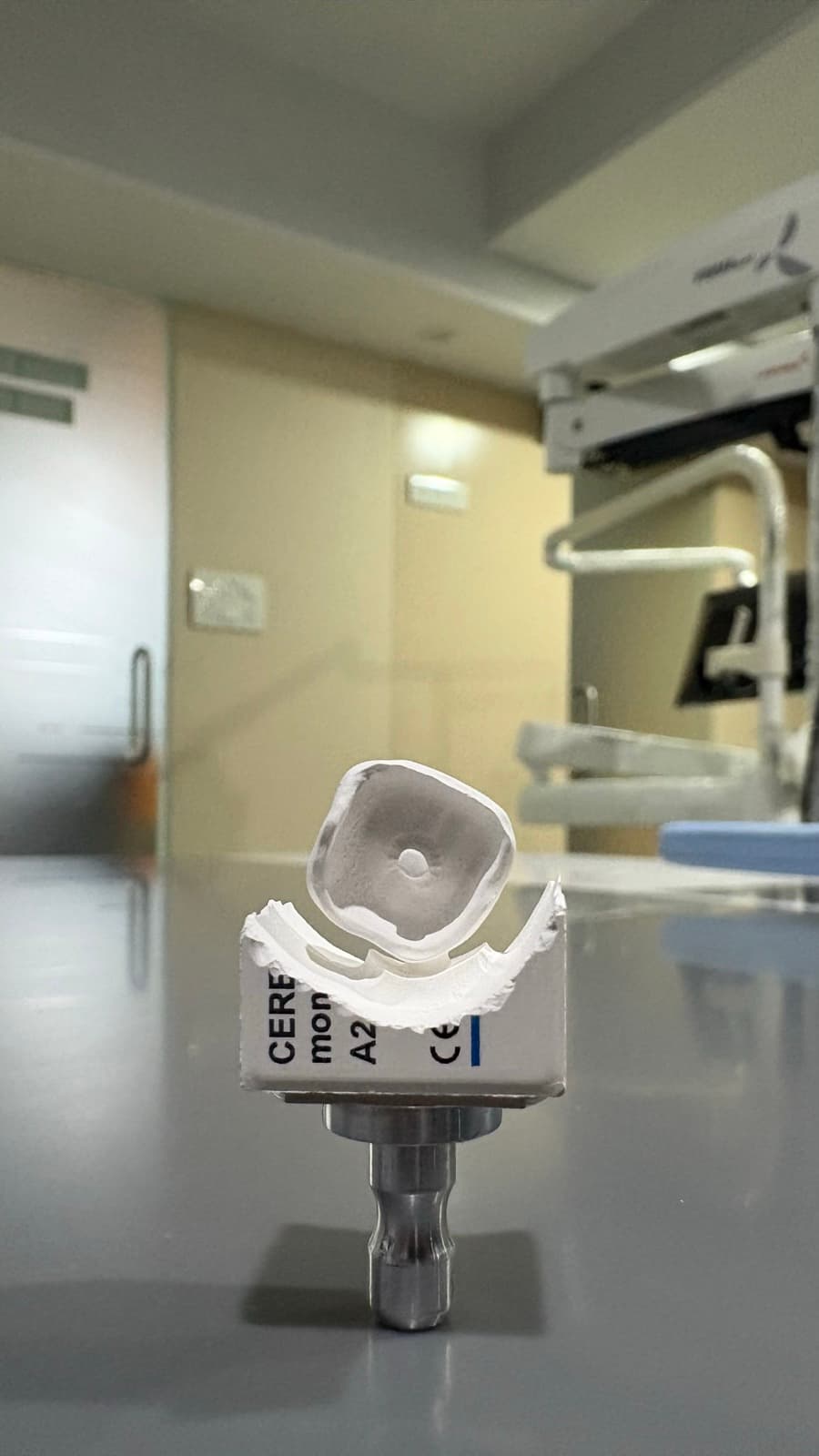
One-Visit Ceramic Fillings in Surat: CEREC vs Composite
When a cavity is small, a tooth-coloured composite filling placed directly in the tooth is often all you need. When a cavity is large, or an old silver or composite filling is breaking down, a ceramic filling (also called an inlay or onlay) can be a stronger, longer-lasting choice. At Ocean 32 we make one-visit ceramic fillings in Surat using CEREC, scanning the tooth and milling the ceramic in our clinic so the restoration can usually be fitted the same day.
Written and medically reviewed by Dr. Kenil A. Lathia, MDS (Conservative Dentistry & Endodontics), Ocean 32 – The Dentofacial Hub. Last reviewed: November 2026.
Who is this for?
You may want to discuss a ceramic or composite filling if:
- You feel a sharp twinge when biting on a particular tooth.
- Food keeps getting stuck between two back teeth.
- An old silver (amalgam) filling has dark edges, cracks around it or has chipped.
- A composite filling has stained, worn or keeps breaking.
- A cusp (corner) of a back tooth has broken off.
- You have sensitivity to sweets or cold in one tooth.
- You have just had root canal treatment and need the tooth rebuilt.
Composite vs ceramic: the key differences
Composite (direct) fillings
- Tooth-coloured resin placed and shaped directly in the tooth, then hardened with a light.
- Usually done in one appointment and removes the least tooth structure.
- Well suited to small and medium cavities and front teeth.
- In large cavities on back teeth, composite can wear, stain or shrink slightly, and the edges may break down over time.
Ceramic (CEREC) fillings: inlays and onlays
- Made outside the mouth from a solid block of ceramic, such as CEREC Tessera or e.max, then bonded into the tooth.
- Strong and wear-resistant, with a natural translucency that blends with enamel.
- An onlay can cover and protect weakened cusps, often avoiding the need for a full crown.
- Requires a little more preparation time and is suited to larger cavities rather than small ones.
Neither option is "always better". The right choice depends on cavity size, the amount of healthy tooth left, your bite and whether you grind your teeth.
How a one-visit ceramic filling works at Ocean 32
- Examination and digital X-ray to check the extent of decay and the health of the nerve.
- Numbing and preparation. Decay and any old filling are removed, keeping as much healthy tooth as possible. Magnification helps us see cracks and decay margins clearly.
- Digital scan. The prepared tooth is scanned with the Dentsply Sirona Primescan intraoral scanner, without impression putty.
- Design. The inlay or onlay is designed on screen to match your bite and the shape of neighbouring teeth.
- Milling. The restoration is milled in-house on CEREC Primemill from a ceramic block, then finished and, if needed, characterised for colour.
- Bonding. The ceramic is tried in, bonded to the tooth and the bite is checked and polished.
Learn more on our CAD/CAM inlays and onlays page.
What to expect on the day
A ceramic filling appointment is longer than a simple filling because the scan, design and milling happen while you wait, but it saves a second visit and a temporary filling. You will be numb throughout, and most patients find the visit comfortable. See our comfortable dentistry page for more on how we keep longer appointments relaxed.
Aftercare
- Wait for the numbness to wear off before eating, so you do not bite your cheek or tongue.
- Mild sensitivity to cold for a few days can occur and usually settles.
- Brush and clean between teeth daily; the edges of any filling can still develop decay.
- If you grind your teeth, a night guard helps protect both composite and ceramic.
- Tell us if the bite feels high, as a small adjustment usually solves it.
Risks and limitations
- Ceramic can chip or fracture under heavy force, particularly with grinding.
- Removing deep decay can sometimes expose or irritate the nerve. If the nerve is affected, root canal treatment may be needed.
- Sensitivity after treatment is possible with both types.
- Very small cavities are usually better suited to composite, because ceramic needs a minimum thickness.
- Any restoration may eventually need repair or replacement.
Alternatives
Besides composite and ceramic fillings, the main alternative for a badly broken tooth is a full crown, such as a same-day ceramic crown. For front teeth with chips or discolouration, composite bonding or ceramic veneers may be considered.
For patients travelling from abroad
Because CEREC fillings are scanned, designed and milled in our clinic, most can be completed in a single visit, with a short check a few days later if needed. Several teeth can usually be treated within a 2–3 week trip.
Areas we serve
Patients from Adajan, Pal, Rander and Piplod visit us for CEREC fillings, and many also come from Vesu, City Light and Varachha.
Frequently asked questions
Is a ceramic filling the same as a crown?
No. An inlay or onlay replaces only the missing part of the tooth, while a crown covers the whole visible tooth. Onlays often allow more natural tooth to be preserved.
Should I replace my old silver fillings?
Not automatically. We advise replacement when a filling is cracked, leaking, has decay around it, or the tooth is cracking. Sound fillings can often be left.
Does a one-visit ceramic filling take long?
It is longer than a simple filling because milling happens during the visit, but it avoids a second appointment and a temporary filling.
Will the ceramic match my tooth colour?
Ceramic blocks come in many shades and can be characterised, so the result is usually very natural.
Which lasts longer, composite or ceramic?
For larger restorations on back teeth, ceramic is generally more wear-resistant. For small cavities, a well-placed composite performs well.
Book a filling consultation
To book, WhatsApp us on +91 74900 43232 or use our contact page. Ocean 32 – The Dentofacial Hub, 302, 3rd Floor, Western Arena, Madhuvan Circle to Green City Road, above HDFC Bank, Adajan, Surat, Gujarat 395009. Open Monday to Saturday, 10 AM to 8 PM.
This page is for general information only and is not a substitute for professional advice. A diagnosis needs an examination by a dentist.