

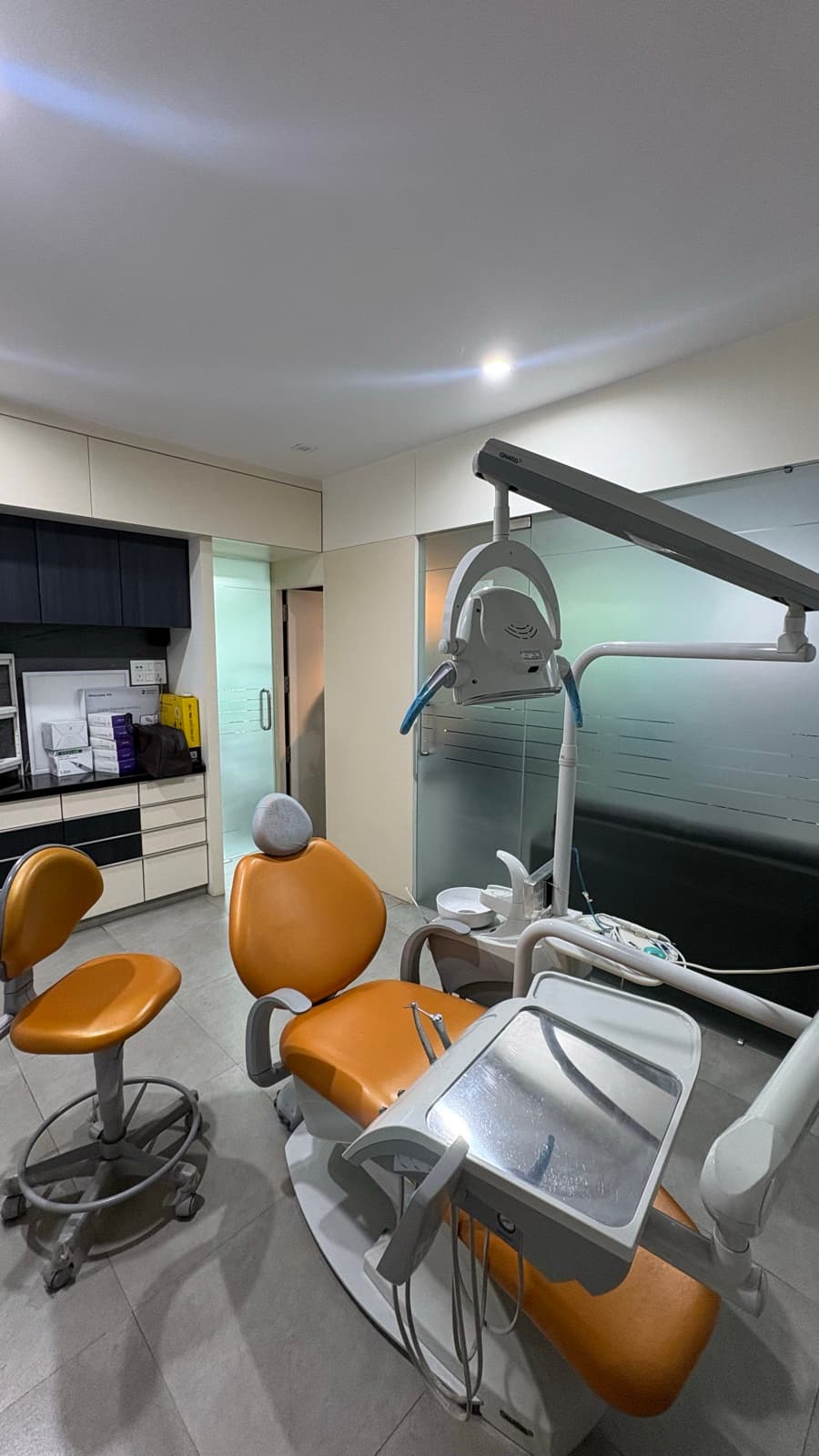
Gum Disease Treatment in Surat: Scaling and Root Planing
Gum disease is a bacterial infection of the gums and the bone that holds the teeth. It is often silent in the early stages, and many people only notice it when their gums bleed or teeth start to feel loose. Gum disease treatment in Surat at Ocean 32 usually begins with a thorough examination and scaling and root planing, a deep cleaning below the gumline that removes the deposits feeding the infection.
Written and medically reviewed by Dr. Kenil A. Lathia, MDS (Conservative Dentistry & Endodontics), Ocean 32 – The Dentofacial Hub. Last reviewed: November 2026.
Who is this for?
Book a gum assessment if you notice any of these:
- Bleeding gums while brushing, flossing or eating an apple.
- Red, swollen or tender gums.
- Bad breath or a bad taste that keeps coming back.
- Gums that seem to be pulling back, making teeth look longer.
- New gaps appearing between teeth, or front teeth fanning out.
- Teeth that feel loose or a bite that feels different.
- Pus or discharge from the gums.
- You have diabetes, smoke, or have a family history of gum disease or early tooth loss.
Gum disease is commonly called pyorrhoea. Early gum inflammation (gingivitis) can usually be reversed with professional cleaning and good home care. Once the bone is affected (periodontitis), the aim is to stop the disease and keep the teeth healthy for as long as possible.
How treatment works at Ocean 32
- Gum charting. We measure the depth of the space between gum and tooth (the pocket) at several points around each tooth, record bleeding and check tooth mobility.
- Digital X-rays to see the level of bone around the teeth.
- Explaining the diagnosis. You see your X-rays and charting, and we explain the stage of the disease and what treatment involves.
- Scaling and root planing. Under local anaesthetic where needed, hard and soft deposits are removed from the tooth surfaces and roots below the gum, and the root surfaces are smoothed so the gum can reattach and heal. This is often done one section of the mouth at a time over two or more visits.
- Supporting measures. In selected cases, laser-assisted dentistry may be used as an addition to cleaning, and medicated rinses or medicines may be prescribed.
- Re-evaluation. After the gums have had time to heal, usually several weeks, we re-measure the pockets to see how they have responded.
- Maintenance. Regular professional cleanings at intervals suited to your gums, because periodontitis can return if it is not maintained.
What to expect on the day
With the area numbed, most patients find root planing comfortable; you will feel scraping and vibration rather than pain. Afterwards, gums may be sore for a day or two and teeth may feel sensitive to cold. Our comfortable dentistry page explains how we keep these visits gentle.
Aftercare at home
- Brush twice daily with a soft brush, angled towards the gumline.
- Clean between teeth every day with interdental brushes or floss, as we demonstrate.
- Use any rinse only for the period advised.
- Expect gums to shrink slightly as swelling reduces. This is a sign of healing, even though teeth may look a little longer.
- Stop smoking if you can; it is one of the biggest risk factors for gum disease and poor healing.
- If you have diabetes, keep your sugar levels well controlled. Gum health and blood sugar affect each other.
Risks and limitations
- Temporary sensitivity to cold after treatment is common.
- Slight gum recession and small dark spaces between teeth can become visible as inflammation settles.
- Deep pockets may not fully close with cleaning alone and may need gum surgery (pocket reduction).
- Bone already lost does not usually regrow with cleaning; treatment aims to stop further loss.
- Teeth that are very loose may still be lost despite treatment.
- Results depend heavily on daily home care and regular maintenance visits.
Alternatives
For mild gingivitis, a routine professional cleaning and better home care may be enough. For advanced disease, pocket reduction surgery or regenerative procedures may be considered after the initial cleaning. If teeth cannot be saved, replacement options include dental implants once the gums are healthy, bridges or dentures. Gum disease should be controlled before any implant, crown or cosmetic treatment.
For patients travelling from abroad
Scaling and root planing can usually be completed over two to four visits within a 2–3 week trip. The re-evaluation is ideally done several weeks later; if you have flown home, your local dentist can perform it, and we will share your charting and X-rays.
Areas we serve
We see patients with gum problems from across western Surat, including Adajan, Pal, Rander and Piplod, and also from Ghod Dod Road, Athwa and Navsari.
Frequently asked questions
Is bleeding from the gums normal?
No. Healthy gums do not usually bleed with gentle brushing. Bleeding is an early sign of inflammation and is worth checking.
Will deep cleaning loosen my teeth?
Cleaning does not cause looseness. Teeth may feel slightly different as tartar that was bridging them is removed, but as gums heal they often feel firmer.
How is scaling and root planing different from a normal cleaning?
A routine cleaning focuses on deposits above and just below the gum. Root planing reaches deeper into the pockets and smooths the root surface, and is usually done under local anaesthetic.
Can gum disease be cured?
Gingivitis can be reversed. Periodontitis can be controlled and kept stable, but it needs lifelong maintenance.
How often will I need cleanings afterwards?
This depends on how your gums respond. Many patients with treated periodontitis need maintenance visits more often than once a year; we will advise a suitable interval.
Book a gum assessment
To book, WhatsApp us on +91 74900 43232 or use our contact page. Ocean 32 – The Dentofacial Hub, 302, 3rd Floor, Western Arena, Madhuvan Circle to Green City Road, above HDFC Bank, Adajan, Surat, Gujarat 395009. Open Monday to Saturday, 10 AM to 8 PM.
This page is for general information only and is not a substitute for professional advice. A diagnosis needs an examination by a dentist.