

Bone Grafting for Implants in Surat: Ridge Preservation
After a tooth is lost, the jawbone that held it gradually shrinks. If too much bone is lost, an implant may not have enough support. Bone grafting for dental implants in Surat at Ocean 32 is used either to preserve bone at the time of an extraction or to rebuild bone that has already been lost, so that an implant can be placed in a stable, well-planned position.
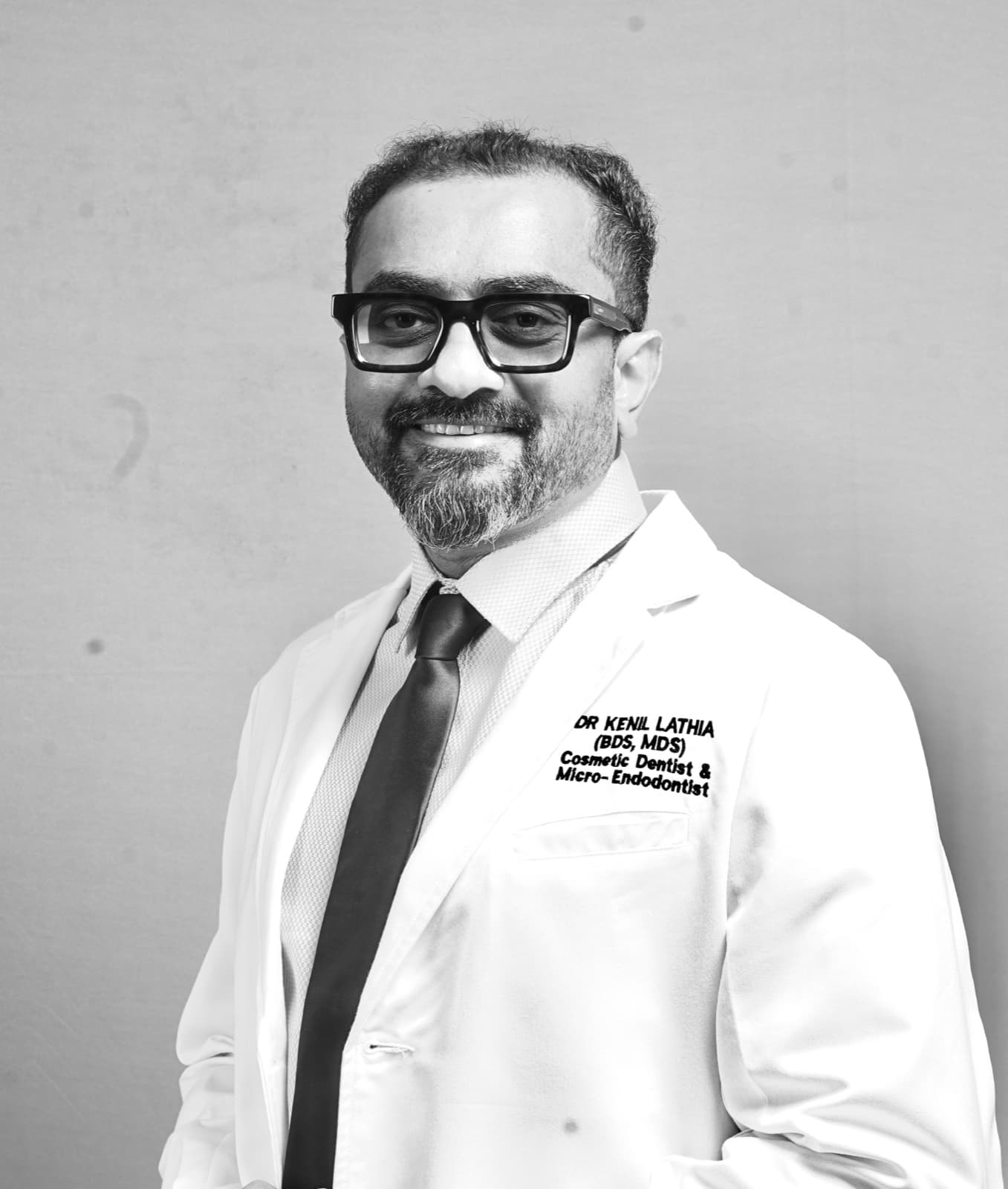
Written and medically reviewed by Dr. Kenil A. Lathia, MDS (Conservative Dentistry & Endodontics), Ocean 32 – The Dentofacial Hub. Last reviewed: November 2026.
Who is this for?
You may be a candidate for grafting or ridge preservation if:
- You have been told "there is not enough bone" for an implant.
- A tooth was removed years ago and the gum in that area now looks thin, sunken or dipped.
- Your denture has become loose over time because the ridge underneath has shrunk.
- A tooth is about to be extracted and you plan to replace it with an implant later.
- An upper back tooth is missing and the sinus sits low above the gap.
- A front tooth gap looks hollow compared with neighbouring teeth, affecting the smile.
Types of grafting we discuss
- Ridge (socket) preservation: graft material is placed into the socket immediately after extraction and covered, to reduce the shrinkage that normally follows.
- Grafting at the time of implant placement: small areas of bone deficiency are built up around the implant during the same surgery.
- Ridge augmentation: a narrow or short ridge is built up as a separate step before the implant.
- Sinus lift: in the upper back jaw, the sinus floor is gently raised and graft material added below it to create height for an implant.
Graft materials may be processed bone substitutes, with or without a protective membrane. We explain the material proposed for your case and why.
How the treatment works at Ocean 32
- Assessment. Examination, digital X-rays and a discussion of your medical history. Any further imaging needed for implant planning is explained and arranged.
- Plan. We explain whether grafting can be done with the extraction or implant, or needs a separate stage, and give you a realistic timeline.
- Procedure. Under local anaesthetic, the area is opened, the graft placed and the gum closed with stitches.
- Healing. The graft needs time to mature into bone. Depending on the type and size of graft, this commonly takes a few months before an implant can be placed.
- Implant stage. Once healed, the area is re-checked and the implant is placed, as described on our dental implants page.
What to expect on the day
Ridge preservation done with an extraction adds only a little time to the appointment. Larger grafts take longer. You will be numb throughout and should feel pressure rather than pain. Some swelling and tenderness over the following days is normal. Our comfortable dentistry page explains how we keep surgical visits gentle.
Recovery and aftercare
- Do not press on the area with your tongue or fingers, and avoid pulling your lip to look at it.
- Soft diet and chew on the other side for the period advised.
- No smoking; it slows healing and can cause the graft to fail.
- After a sinus lift, avoid blowing your nose forcefully, and sneeze with your mouth open, for the period advised.
- Take medicines as prescribed and keep the stitch-removal and review visits.
- If you wear a denture, we may adjust it so it does not press on the graft.
Risks and limitations
- A graft may not take fully, and some or all of it may need to be repeated.
- Small particles of graft material may come out through the stitches in the first days; this is usually not serious, but tell us.
- Infection, swelling and bruising can occur.
- A sinus lift carries a small risk of sinus membrane perforation or sinus infection.
- Grafting adds time to the overall implant treatment.
- Smoking, uncontrolled diabetes and some medications reduce success.
Alternatives
- Shorter or narrower implants, or angled implants, can sometimes avoid grafting.
- Full-arch solutions such as All-on-4 use angled implants to work with available bone.
- A conventional bridge on neighbouring teeth, if they are suitable.
- A removable partial denture.
- Keeping the tooth: before any extraction, check whether the tooth can be saved with microscopic root canal treatment or re-root canal treatment. Your own tooth, when it can be saved predictably, avoids the need for grafting altogether.
For patients travelling from abroad
Ridge preservation can be done during a 2–3 week visit along with an extraction, leaving the implant for a later trip once healing is complete. Larger grafts and sinus lifts also need healing time, so implants are generally placed on a return visit. We review X-rays or photos sent ahead of your trip to plan the stages.
Areas we serve
Our Adajan clinic sees patients from Pal, Rander and Athwa, as well as Varachha and Katargam, and from South Gujarat towns like Navsari and Bardoli for implant and grafting consultations.
Frequently asked questions
Why does the bone shrink after an extraction?
Bone around a tooth is maintained partly by the tooth itself. Once the tooth is removed, the body gradually resorbs some of that bone, especially in the first months.
Is bone grafting painful?
The procedure is done under local anaesthetic. Afterwards, soreness and swelling are usually manageable with prescribed medicines.
How long before I can get an implant after grafting?
It depends on the type and size of graft. Small grafts may be done with the implant itself; larger ones generally need a few months of healing first.
Do I always need a graft if a tooth was removed long ago?
Not always. Some people still have enough bone. An examination and X-rays are needed to decide.
Can I wear my denture after a graft?
Often yes, after adjustment, but sometimes we advise leaving it out for a short time so it does not press on the healing area.
Book an implant and bone assessment
To book, WhatsApp us on +91 74900 43232 or use our contact page. Ocean 32 – The Dentofacial Hub, 302, 3rd Floor, Western Arena, Madhuvan Circle to Green City Road, above HDFC Bank, Adajan, Surat, Gujarat 395009. Open Monday to Saturday, 10 AM to 8 PM.
This page is for general information only and is not a substitute for professional advice. A diagnosis needs an examination by a dentist.